Regional Policy Variations Shaping Entry Protocols for Mobile-Based Incentive Programs
Ulrich Washington · Jun 8, 2026
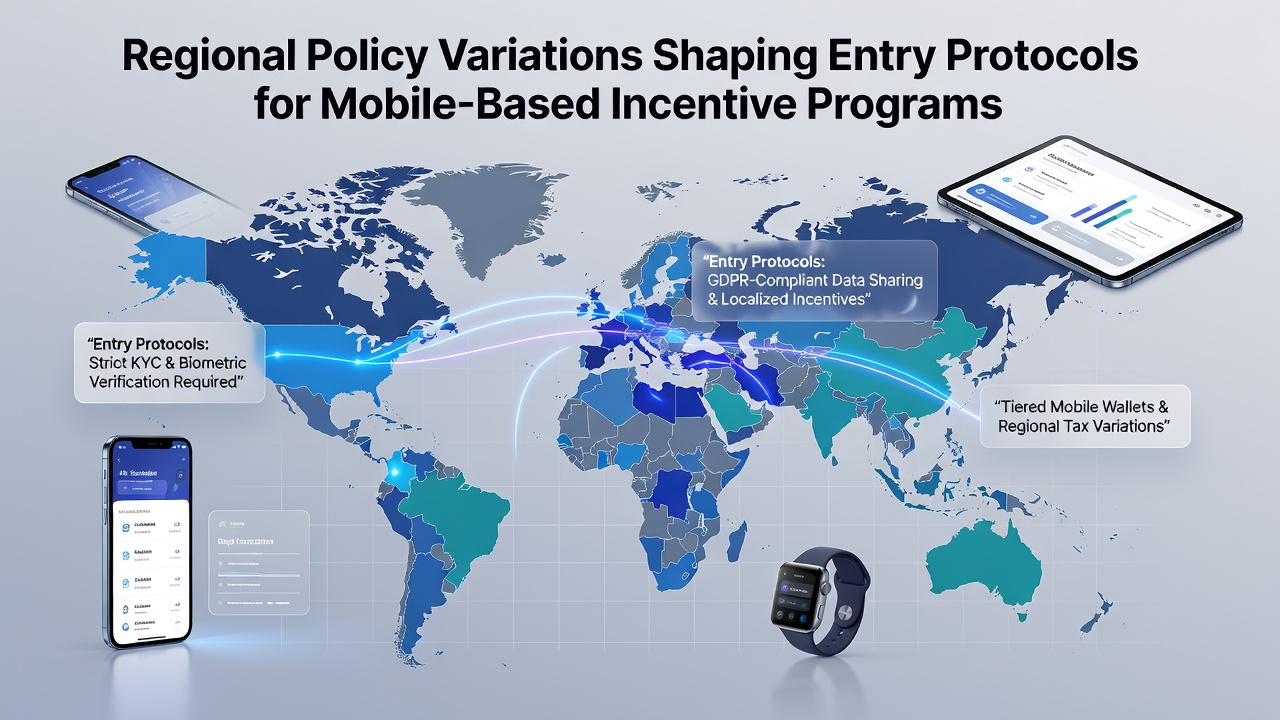
Regional Policy Variations Shaping Entry Protocols for Mobile-Based Incentive Programs
Regional differences in regulatory frameworks continue to define how users access mobile-based incentive programs, with entry protocols adapting to local laws on data handling, consent mechanisms, and eligibility verification. Policies in North America emphasize consumer protection through specific disclosure requirements, while European standards focus on data minimization and explicit opt-in processes. Observers note these variations create distinct technical and procedural hurdles for program operators seeking compliance across borders.
North American Approaches to Entry Requirements
Canadian regulations administered through the Competition Bureau require clear terms for incentive entries, including age thresholds and geographic restrictions that mobile apps must enforce via location services and account verification steps. Data shows these rules often mandate separate consent screens for promotional communications, which integrate directly into the registration flow. In the United States, Federal Trade Commission guidelines shape similar protocols by requiring truthful advertising disclosures and prohibiting deceptive entry methods, leading developers to implement automated checks that flag incomplete submissions before they reach servers.
Joint monitoring between these two countries has produced aligned yet distinct standards, where cross-border users encounter layered prompts that verify residency and confirm understanding of prize distribution timelines. Research indicates such measures reduce eligibility disputes by prompting users to review conditions at multiple points during onboarding.
European Frameworks and Consent Protocols
European Union directives on digital services impose strict rules around personal data processing, requiring mobile incentive platforms to obtain granular permissions before collecting device identifiers or behavioral data used for entry tracking. These policies translate into entry interfaces that present modular consent options, allowing participants to select which data categories they share while still qualifying for rewards. Updates scheduled for implementation in June 2026 will further refine these requirements by mandating enhanced transparency reports that detail how entry data flows through third-party processors.
Operators respond by building dynamic forms that adjust based on user location detection, ensuring compliance without disrupting the overall user experience. Evidence from industry reports highlights how these adjustments have standardized certain verification sequences across member states, although national interpretations still introduce minor procedural differences in countries like Germany and France.
Asia-Pacific Regional Distinctions

Australian Competition and Consumer Commission standards require incentive programs to include cooling-off periods and accessible dispute resolution links within mobile entry flows, which often appear as expandable sections in app interfaces. These elements connect directly to eligibility confirmation steps, ensuring users acknowledge refund or withdrawal options before final submission. Meanwhile, Singaporean guidelines stress real-time identity verification through integrated government-linked services, prompting apps to incorporate secure API calls that validate participant details instantly upon entry attempt.
Those who've examined these systems observe that the resulting protocols create region-specific bottlenecks, such as mandatory two-factor authentication sequences in some jurisdictions versus simpler email confirmations in others. Data flows between platforms reflect these differences, with aggregated entry logs segmented to meet varying retention and reporting mandates.
Technical Adaptations Across Borders
Mobile developers address these policy layers through configurable backend systems that apply rule sets based on detected user locations, routing entries through appropriate verification pathways. Studies from academic institutions have documented how such architectures accommodate simultaneous compliance with multiple regional standards, reducing the need for separate app versions while maintaining audit trails for each jurisdiction. What's notable is the emergence of shared industry tools that standardize consent logging, allowing operators to demonstrate adherence without redundant coding efforts.
Cross-platform data exchanges further illustrate these adaptations, as entry timestamps and qualification windows adjust automatically to align with local daylight saving transitions and regulatory calendars. Observers point to examples where programs serving multiple continents synchronize their notification systems to respect quiet hours defined by regional privacy rules.
Conclusion
Regional policy variations continue to mold entry protocols for mobile incentive programs through targeted requirements on consent, verification, and disclosure. Operators navigate these differences by deploying adaptable technical solutions that respond to location-specific rules, while users encounter tailored sequences designed to meet local compliance benchmarks. Continued evolution in these frameworks, including measures effective in June 2026, will likely sustain the need for flexible systems that balance accessibility with regulatory adherence across global markets.