Leveraging Mobile Device Sensors to Validate Real-Time Participation in Reward Programs
Harper Simon · Jul 20, 2026
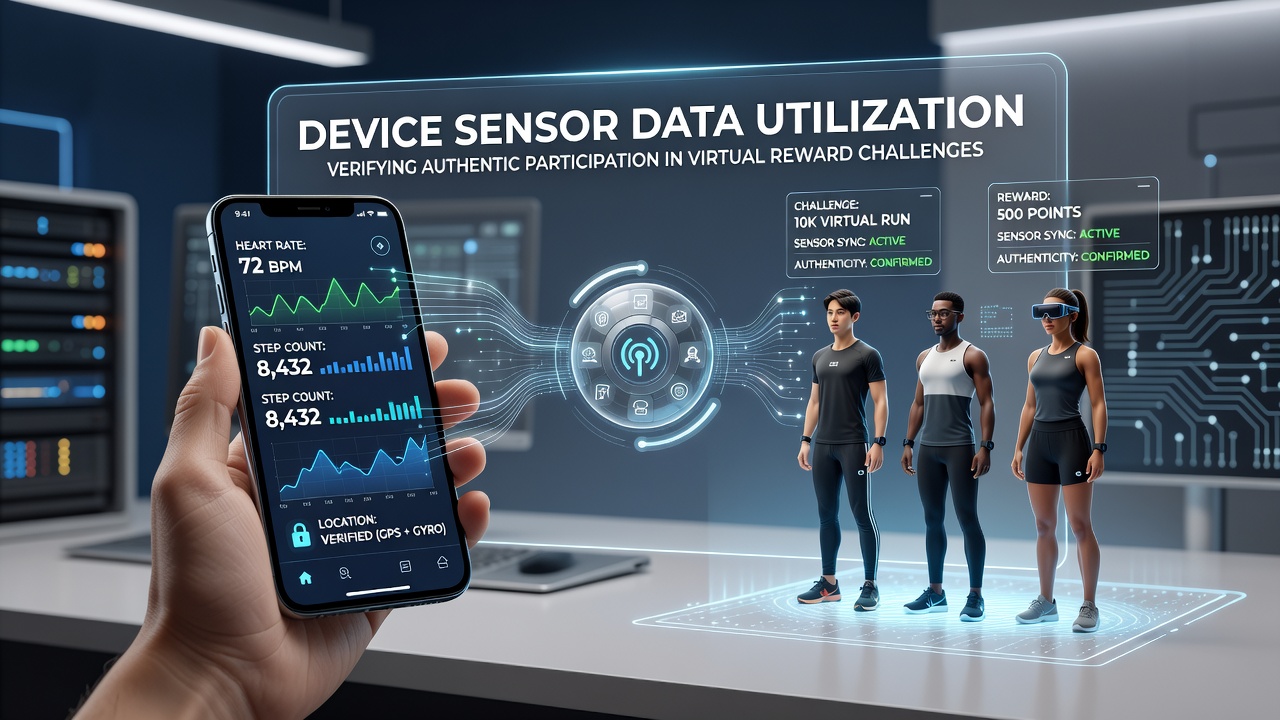
Leveraging Mobile Device Sensors to Validate Real-Time Participation in Reward Programs
Device sensors have become central to authentication processes across digital platforms that manage virtual reward challenges, where systems analyze accelerometer readings, gyroscope inputs, and location signals to distinguish genuine human activity from automated scripts. Research indicates that these methods emerged as participation volumes grew in the mid-2020s, with platforms integrating sensor fusion techniques to cross-check movement patterns against expected human behaviors during entry submissions.
Core Sensor Categories and Data Collection
Accelerometers capture linear motion changes that reflect natural hand tremors and device tilts, while gyroscopes track rotational shifts typical of users adjusting their phones mid-interaction, and GPS modules confirm geographic consistency over time. Touchscreen pressure sensors add another layer by measuring variable force application, which automated bots rarely replicate with the same irregularity. Data flows from these components feed into verification algorithms that establish baseline profiles for each session, flagging deviations such as perfectly linear trajectories or absent micro-movements that suggest scripted inputs.
Integration with Participation Timelines
Platforms coordinate sensor streams with entry windows, capturing continuous readings from the moment a challenge loads until submission completes, and this approach allows real-time filtering during peak periods like those observed in July 2026 when multiple global events overlapped across time zones. Observers note that such synchronization reduces instances of bulk automated entries by requiring sustained, context-aware device interaction rather than one-time credential checks. Systems often log timestamped sensor packets alongside eligibility metadata, creating audit trails that support post-event reviews without interrupting user flow.
Privacy Frameworks and Regulatory Context
Regulatory bodies emphasize consent mechanisms before sensor access activates, with the Federal Trade Commission outlining requirements for transparent data handling in mobile applications that process location and motion information. In parallel, European data protection standards require minimization of retained sensor logs, prompting developers to process readings on-device where possible before transmitting aggregated indicators. Those who manage these systems report that compliance updates scheduled around mid-2026 aligned with broader digital services legislation, ensuring sensor utilization remains tied to specific verification purposes rather than broader profiling.
One documented implementation involved a North American gaming network that combined barometric pressure data with ambient light readings to detect indoor versus outdoor contexts, adding environmental context that further isolated synthetic participation attempts. Such layered approaches demonstrate how individual sensor weaknesses get offset through combination, creating verification scores that platforms adjust dynamically based on historical challenge data.

Technical Processing and Anomaly Detection
Algorithms apply machine learning models trained on large datasets of verified human sessions to score incoming sensor sequences, identifying clusters that fall outside normal variance ranges for factors like swipe velocity curves or device orientation stability. When scores drop below established thresholds, systems may prompt secondary confirmations such as CAPTCHA elements or short follow-up gestures that generate fresh sensor samples. Industry reports from the International Game Developers Association highlight that these detection pipelines have scaled to handle millions of daily interactions while maintaining low false-positive rates through continuous model retraining on regional usage patterns.
Cross-platform data mapping plays a supporting role here, since users often switch devices mid-challenge, and systems reconcile sensor baselines across hardware variations by normalizing readings against device-specific calibration files. This process becomes especially relevant during extended events spanning multiple regions, where time zone shifts influence both participation peaks and the freshness of location data.
Future Refinements and Industry Trends
Developers continue exploring additional inputs such as magnetometer readings for orientation relative to magnetic fields and heart rate monitor integration on compatible wearables to add biometric corroboration. Academic studies from institutions including the University of Toronto have examined how combining these signals improves resilience against evolving automation tools that attempt to mimic human sensor signatures. The result is verification frameworks that adapt without requiring constant user intervention, preserving accessibility while upholding entry integrity standards.
Conclusion
Device sensor utilization has established itself as a practical layer within authentication stacks for virtual reward challenges, relying on established hardware capabilities and regulatory-aligned processing methods to maintain participation standards. Continued refinement through cross-regional coordination and model updates positions these techniques to address emerging automation challenges as digital incentive ecosystems expand.