Holiday Calendars and Entry Windows: Timing Challenges in International Mobile Prize Events
Katja Günther · Jul 16, 2026
Holiday Calendars and Entry Windows: Timing Challenges in International Mobile Prize Events
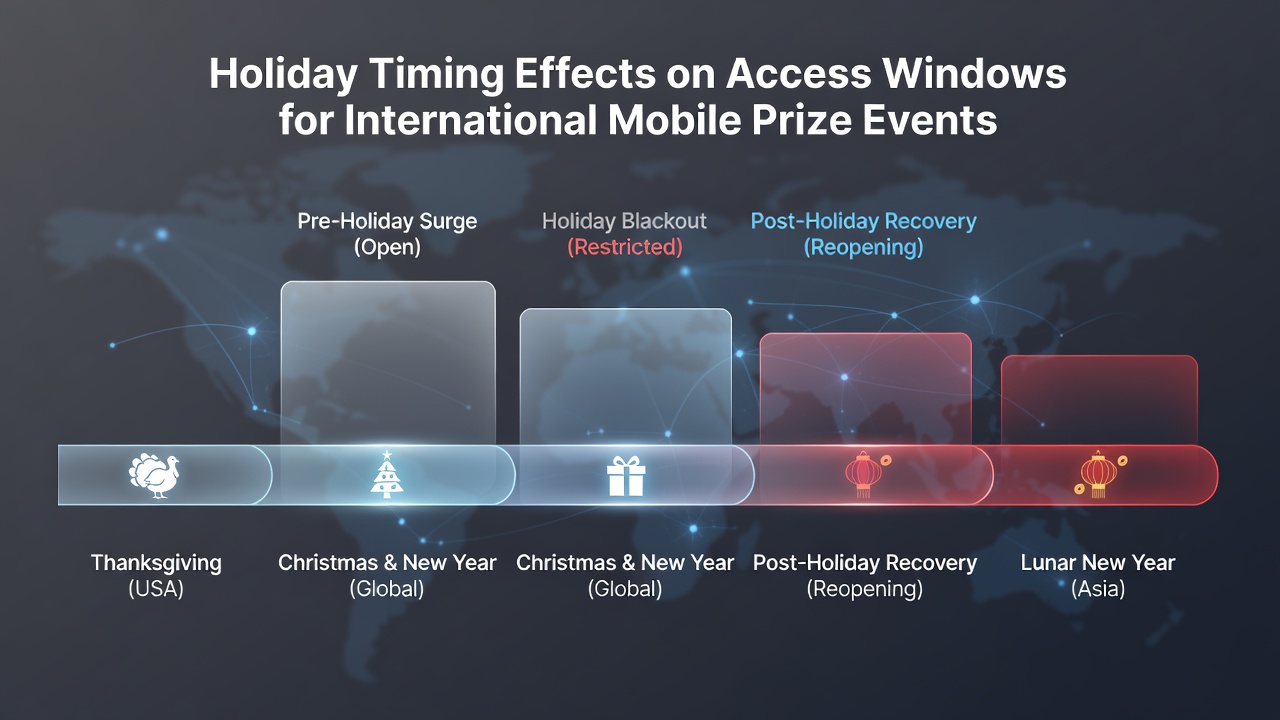
International mobile prize events operate across multiple time zones and national calendars, which creates variable access windows that shift when holidays fall on different dates in participating countries. Organizers schedule entry periods based on server availability and user participation peaks, yet public holidays interrupt these patterns because users in affected regions log in at reduced rates while regulatory offices close for extended breaks.
Regional Holiday Clusters and Access Disruptions
July 2026 includes several overlapping observances that researchers have tracked in prior years for their effects on digital entry systems. Canada Day on July 1 coincides with early summer holidays in parts of Europe, while the United States observes Independence Day on July 4, leading platforms to extend or shorten qualification windows depending on server load data from previous cycles. Observers note that entry traffic drops sharply on these dates in North America, prompting some operators to push deadlines forward by 24 to 48 hours to maintain overall participation numbers.
Asian markets introduce additional variables because Golden Week observances and national foundation days rarely align with Western calendars. When a Japanese public holiday lands mid-week in July, mobile networks experience measurable slowdowns in app-based submissions, according to traffic reports issued by regional telecommunications authorities. Those who monitor cross-border events find that staggered holiday dates force administrators to publish multiple deadline notices rather than a single universal cutoff.
Time Zone Overlaps During Festive Periods
Access windows for mobile prize competitions rely on coordinated universal time settings, but holidays amplify the practical differences between regions. A submission deadline set for midnight UTC may fall during business hours in one country while landing in the early morning of a public holiday elsewhere. Data compiled by the International Telecommunication Union shows that such misalignments correlate with lower completion rates when the deadline coincides with a national day of rest.
Operators address this by publishing localized countdown timers within their apps, yet these adjustments still encounter friction when government agencies responsible for prize regulation close their verification offices. In Australia, for instance, the Australian Competition and Consumer Commission processes certain compliance checks only on business days, which means entries submitted during holiday weekends in July 2026 may face delayed eligibility confirmation even if the platform itself remains operational.
Server Maintenance and Regulatory Closures
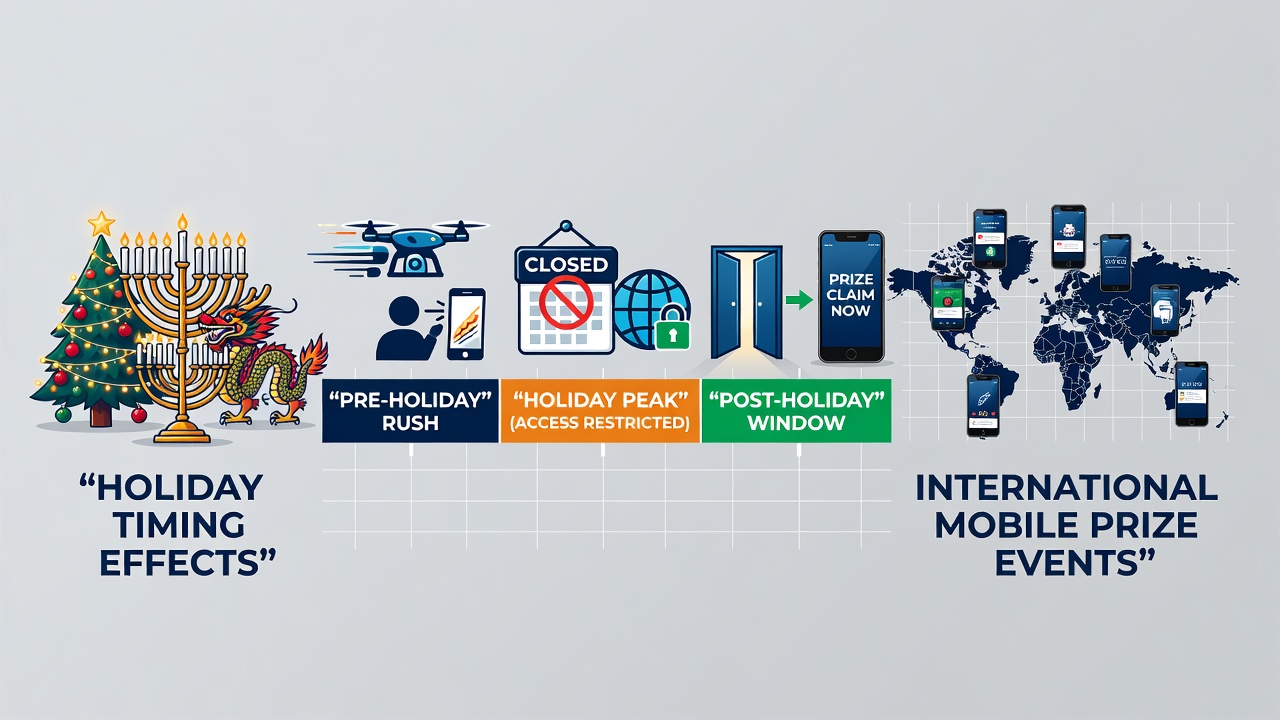
Many platforms schedule routine maintenance during periods of expected low traffic, and holidays provide convenient windows for these updates. When European Union member states observe varying summer shutdowns, teams responsible for backend verification often defer non-critical reviews until after the longest holiday stretch. This practice lengthens the time between submission and confirmation for users in those jurisdictions, according to patterns documented in industry white papers from the Global Mobile Awards research consortium.
Participants who track recurring events learn to anticipate these delays by submitting entries several days before anticipated closures. Evidence from multiple platform logs indicates that early submissions during the final business week before a cluster of holidays achieve higher successful processing rates than those filed on the actual holiday itself.
Strategies Observed Across Platforms
Administrators respond to holiday timing pressures by releasing preliminary schedules months in advance and issuing supplementary notices when regional disruptions appear likely. Some systems automatically extend access windows by a fixed number of hours when traffic analytics detect a holiday-related dip in a specific country code. These automated extensions appear most frequently around major observances such as Canada Day or U.S. Independence Day because historical data sets show consistent participation drops of 30 to 40 percent on those dates.
Collaborative monitoring groups formed by frequent entrants share calendar overlays that map public holidays against published entry periods, allowing members to adjust submission timing without waiting for official announcements. Such groups compile lists of affected jurisdictions and circulate them through dedicated forums, which reduces the number of missed deadlines when July clusters create overlapping restrictions.
Conclusion
Holiday timing continues to shape access windows for international mobile prize events through its influence on user behavior, regulatory availability, and server maintenance schedules. Patterns observed in past cycles, including those projected around July 2026, demonstrate that platforms adapt by publishing localized timers and automated extensions, while participants improve their success rates by consulting shared holiday calendars and submitting entries ahead of anticipated closures. These adjustments maintain overall event integrity across regions even when national observances do not align.