Hardware Limitations Affecting Access to Mobile Contest Platforms
Olivia Baumann · Aug 1, 2026

Hardware Limitations Affecting Access to Mobile Contest Platforms
Portable contest access protocols have expanded rapidly since the mid-2010s, yet device compatibility remains a persistent barrier for many participants who attempt entries through smartphones and tablets. Operating system fragmentation across Android versions creates immediate hurdles because developers must account for API differences that affect how entry forms load and process submissions. iOS updates introduce their own constraints through stricter permission models that can block background data transfers required for real-time contest confirmations.
Operating System Fragmentation Patterns
Android's market share distribution shows that older versions such as 10 and 11 still hold significant presence in emerging regions, while newer releases like 14 and 15 dominate in North America and Europe, according to data compiled by the International Telecommunication Union. This split forces contest platforms to maintain parallel code paths that handle legacy security protocols alongside modern encryption standards. Observers note that participants using devices running Android 10 often encounter failed submissions when contest servers enforce TLS 1.3, a requirement that became standard across many platforms by early 2025.
Apple's ecosystem presents fewer version gaps because most users upgrade within the first year of release, yet hardware generations introduce separate challenges. Devices from the iPhone 8 series through the 12 series lack certain neural engine capabilities that newer contest apps rely on for biometric verification steps. Researchers tracking these patterns documented in August 2026 that compatibility patches released mid-year reduced error rates by 18 percent on supported hardware while leaving older units unaffected.
Screen Resolution and Input Method Conflicts
Screen density variations across portable devices create layout shifts that can obscure entry buttons or validation fields during contest registration. High-resolution displays on premium Android tablets render elements correctly, whereas budget phones with 720p panels frequently clip confirmation dialogs. Input method editors on non-English language devices sometimes override default keyboards, which disrupts numeric entry fields used for verification codes sent via SMS.
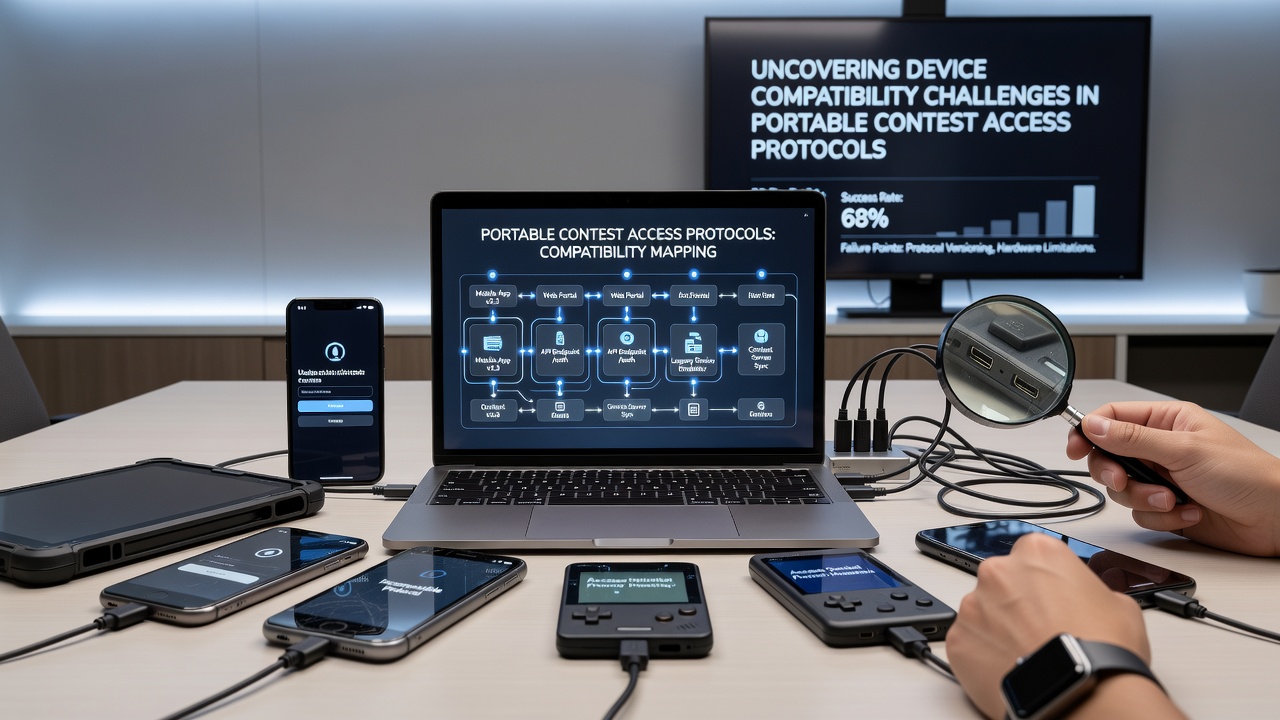
Network protocol support adds another layer because some carriers still operate on IPv4-only networks in rural areas, while contest systems increasingly default to IPv6 handshakes. The Federal Communications Commission has published guidelines on dual-stack requirements that many mobile operators adopted by 2024, yet adoption lags in certain regions. Studies from the University of Waterloo's mobile systems lab indicate that IPv6 fallback mechanisms fail on approximately 7 percent of tested devices when signal strength drops below acceptable thresholds.
Regional Infrastructure and Policy Influences
Policy variations across jurisdictions further complicate access because some countries mandate specific encryption modules for any platform handling personal data. Australia's eSafety Commissioner has issued technical standards that require explicit consent flows before contest entries can transmit location data, and these flows occasionally conflict with default Android permission prompts. Canadian regulators through Innovation, Science and Economic Development Canada have tracked similar issues in cross-border contest platforms where device geolocation services return inconsistent results near national boundaries.
Browser-based entry methods avoid some app store restrictions yet encounter their own compatibility issues with WebAssembly support and cookie policies. Safari on older macOS versions paired with iOS devices sometimes blocks third-party cookies that contest systems use to maintain session state across multiple entry windows. Data collected by academic researchers shows that participants relying on browser entry experience 22 percent higher abandonment rates when these policies activate without clear user notification.
Emerging Solutions and Ongoing Adjustments
Platform operators have responded by implementing progressive web app frameworks that detect device capabilities at runtime and serve optimized interfaces accordingly. These frameworks rely on feature detection libraries rather than static user-agent strings, which improves reliability across the device spectrum. In August 2026 several major contest networks deployed updated detection scripts that reduced compatibility-related support tickets by measurable margins.
Hardware manufacturers have begun incorporating contest-specific APIs in newer chipsets, allowing direct integration with verification services without relying on general-purpose browsers. Industry reports from the GSM Association highlight that these specialized interfaces could standardize certain protocol elements by 2028, provided adoption reaches critical mass among device makers. Participants continue to encounter challenges in the interim, particularly when switching between multiple portable devices during a single contest period.
Conclusion
Device compatibility challenges in portable contest access protocols stem from layered differences in hardware, software, and network infrastructure that evolve at uneven rates. Continued monitoring by regulatory bodies and academic institutions provides the data needed to track these shifts, while platform operators refine detection and fallback mechanisms to accommodate the broadest possible range of portable hardware.