Global Time Zone Coordination Issues in Live Prize Entry Systems Spanning Multiple Regions
Morgan Zimmermann · Jun 11, 2026
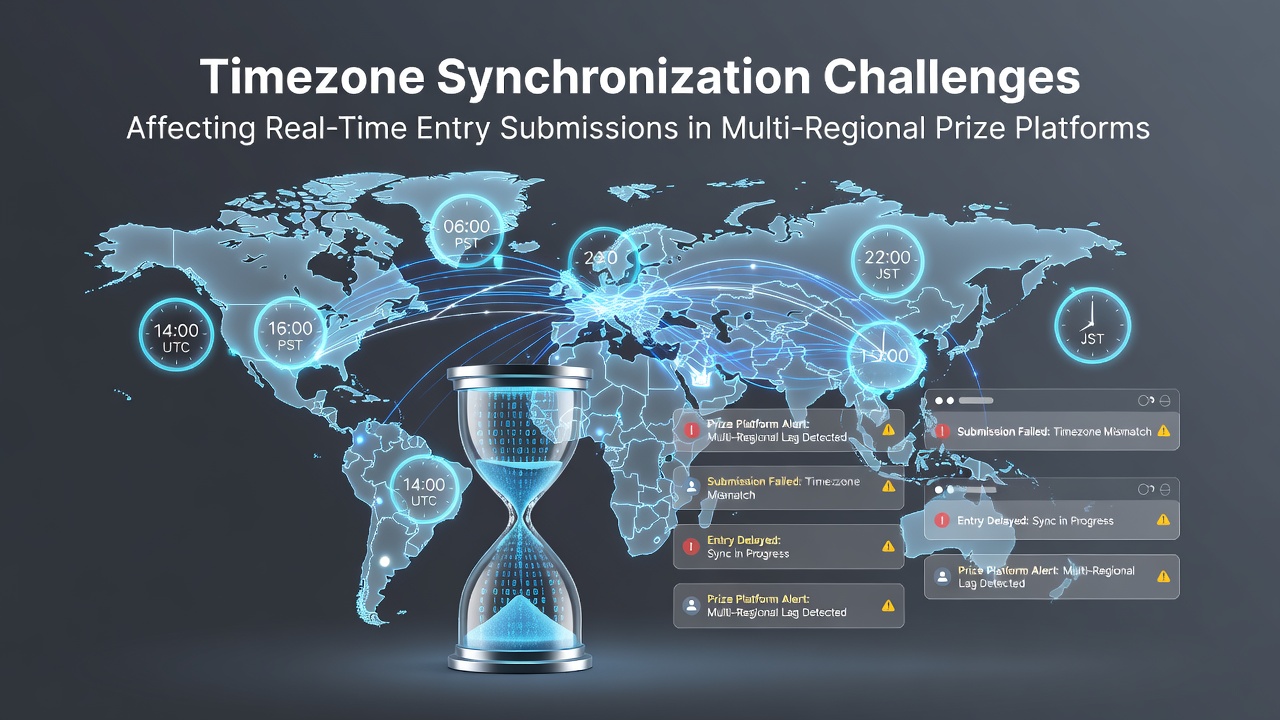
Global Time Zone Coordination Issues in Live Prize Entry Systems Spanning Multiple Regions
Multi-regional prize platforms face persistent difficulties when aligning entry submissions that depend on precise real-time cutoffs across continents, and observers note these problems intensify when daylight saving changes or regional policy shifts occur without synchronized updates. Data from platform analytics shows entry failures spike during transitions between standard and daylight saving periods because server clocks and user devices often operate on mismatched references.
Core Mechanics of Time-Based Entry Windows
Real-time submissions require platforms to process entries within narrow windows measured against a universal standard such as Coordinated Universal Time, yet participants in distant locations submit through local interfaces that convert those windows differently. Researchers at academic institutions have documented how a single entry deadline expressed in UTC can translate into start times that vary by several hours depending on the participant's longitude, creating windows that close before some users even see the opportunity appear. Industry reports indicate platforms mitigate this through automated conversion scripts, although those scripts occasionally fail when operating systems apply updates at different intervals.
Impact of Regional Policy Variations on Synchronization
Countries maintain distinct approaches to time observance, and evidence from regulatory filings reveals that some jurisdictions adjust offsets seasonally while others remain fixed year-round. This patchwork forces platform operators to maintain extensive lookup tables that reference sources like the IANA time zone database, yet updates to those tables sometimes lag behind official government announcements. Participants in regions where policies change without advance notice discover their submitted entries arrive after the recorded cutoff because the platform's reference clock has not yet incorporated the new offset.
Technical Infrastructure and Clock Drift Problems
Server clusters distributed across data centers rely on protocols such as Network Time Protocol to maintain alignment, and studies from research institutions demonstrate that even minor drift of a few seconds can disqualify entries during high-volume periods. One analysis of submission logs found that devices in certain mobile networks introduce additional latency when crossing network boundaries, pushing timestamps beyond acceptable tolerances. Platforms therefore implement redundant verification layers that cross-check the entry timestamp against multiple time sources, although this adds processing overhead that can itself delay confirmation messages.

Case Examples from Multi-Regional Operations
Take one large platform that expanded into markets spanning North America, Europe, and Asia in early 2025; operators there observed recurring mismatches during the March and October clock changes in the northern hemisphere. Entries from Australian participants sometimes registered under the previous day's date because the platform's Australian data node applied a different offset calculation than the central European hub. Similar patterns emerged in June 2026 when several platforms tested new synchronization protocols ahead of anticipated policy adjustments in parts of South America, and logs indicated a measurable drop in rejected submissions after those tests concluded.
Regulatory and Standards Considerations
Government agencies in various regions publish guidelines on digital service timing accuracy, and compliance requires platforms to document how they handle time zone data. The National Institute of Standards and Technology maintains public resources on precise time distribution that many operators reference when designing verification systems. Meanwhile, the Australian Communications and Media Authority has issued statements on consumer protection aspects of timed digital promotions, prompting operators to include clearer local-time explanations in their interfaces. These overlapping requirements create additional layers of verification that platforms must satisfy simultaneously.
Emerging Solutions and Platform Adaptations
Developers increasingly adopt centralized time services that push updates to edge nodes in real time, and early implementations show reduced variance in recorded submission times. Some platforms now expose the UTC deadline alongside the user's local equivalent, allowing participants to confirm alignment before submission. Data collected after these interface changes indicates fewer support tickets related to missed cutoffs, although the improvement varies by region depending on how consistently users check both displayed times.
Conclusion
Timezone synchronization challenges continue to shape how multi-regional prize platforms manage real-time entry submissions, with technical, regulatory, and operational factors all contributing to the complexity. As platforms expand further and as policy changes occur in June 2026 and beyond, continued refinement of clock coordination methods remains essential for maintaining consistent access across all participating regions.