Demographic Shifts in Mobile Reward Event Participation Rates Across Emerging Markets
Katja Günther · Aug 8, 2026
Demographic Shifts in Mobile Reward Event Participation Rates Across Emerging Markets
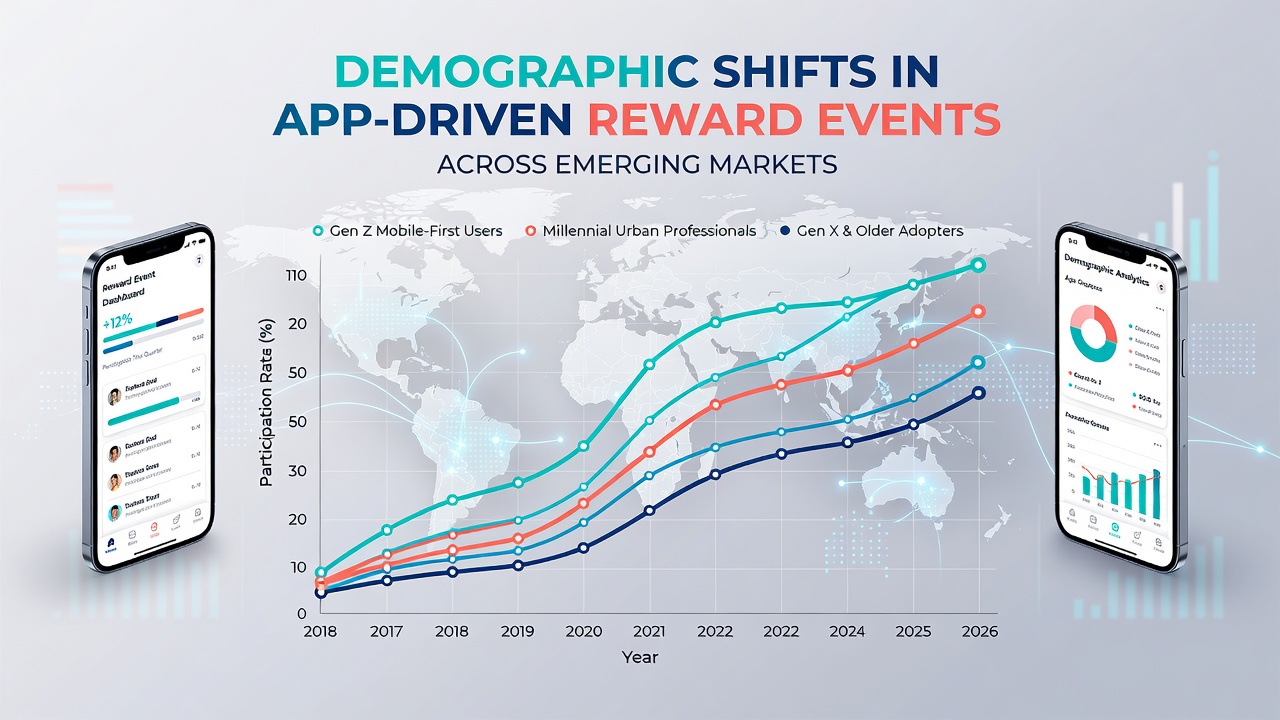
Participation patterns in app-driven reward events have undergone measurable changes across emerging markets since the early 2020s, with data revealing distinct shifts in user demographics tied to broader mobile adoption trends. Researchers tracking these movements note that increased smartphone penetration in regions such as Southeast Asia, Sub-Saharan Africa, and Latin America has altered who engages with these platforms, while economic factors and infrastructure improvements continue to shape entry volumes. Studies from industry analysts indicate that younger cohorts still dominate but older age brackets have begun registering higher activity levels in specific locales, and gender distributions show incremental balancing in several countries.
Mobile Penetration Driving Broader Access
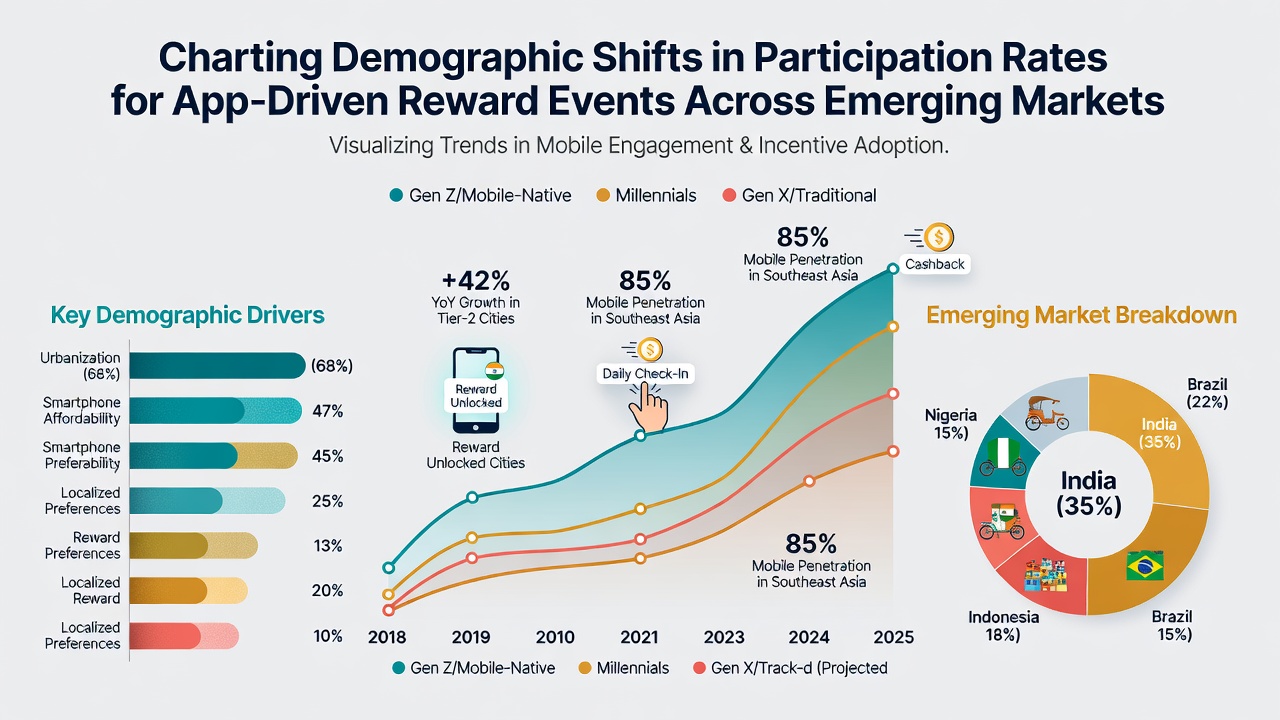
Smartphone ownership rates climbed steadily through 2025 in markets including India, Nigeria, Brazil, and Indonesia, according to reports compiled by the GSMA, which documented over 1.2 billion new connections added in low- and middle-income economies between 2020 and 2025. This expansion allowed reward event platforms to reach users previously limited by feature phone constraints, resulting in participation spikes among previously underrepresented groups. Data collected through app analytics firms reveal that entry rates for daily reward draws rose 18 percent year-over-year in urban centers of these nations by mid-2025, with rural areas following at a slower yet consistent pace once network coverage improved.
Observers tracking August 2026 metrics highlight how 5G rollouts in select Indian states and Brazilian cities coincided with further upticks in multi-session engagement, particularly among users aged 35 to 54 who previously showed lower interaction. These shifts occurred alongside government digital inclusion programs that subsidized device costs, enabling wider demographic reach without altering core reward mechanics.
Age and Gender Distribution Changes
Age breakdowns from platform datasets demonstrate that while 18-to-34-year-olds maintain the largest share of active participants, the proportion of users over 45 increased from 12 percent to 21 percent between 2023 and 2026 in monitored Southeast Asian applications. This movement aligns with findings from academic reviews at institutions in Singapore and Cape Town, where longitudinal studies linked higher disposable time among mid-career professionals to sustained reward event involvement. Younger users, meanwhile, exhibited preference for time-sensitive events tied to social sharing features, whereas older cohorts favored recurring daily formats with simpler interfaces.
Gender participation gaps narrowed in several tracked markets, with female user ratios climbing from 38 percent to 47 percent overall in Latin American reward apps during the same period. Reports from regional trade groups attribute part of this adjustment to targeted notification campaigns and localized content that addressed language and cultural preferences, though complete parity remains uneven across countries. In Nigeria, for instance, female engagement grew faster in urban zones than rural ones, reflecting differences in education access and device ownership patterns documented in World Bank surveys.
Regional Variations and Economic Influences
Economic conditions continue to influence entry volumes, with inflation fluctuations in Argentina and Turkey correlating to temporary dips in premium-tier reward events while free-entry options retained steady uptake. Platforms operating across borders recorded higher consistency in participation when they adapted prize structures to local purchasing power, a pattern noted in cross-regional comparisons published by research consortia in Asia and Africa. Urban participants still outpace rural ones by roughly two-to-one ratios in most datasets, yet mobile money integrations have begun closing that divide in East African nations where transaction volumes for reward redemptions grew 27 percent from 2024 to 2026.
Time zone coordination also plays a documented role, as global events scheduled around peak evening hours in primary markets sometimes exclude users in distant regions, prompting some operators to introduce staggered qualification windows. Evidence from usage logs shows these adjustments lifted cross-time-zone entries by measurable margins in multi-country deployments.
Future Trajectory Based on Current Indicators
Projections derived from 2025-2026 datasets suggest continued diversification if connectivity infrastructure maintains its expansion rate, with potential for greater inclusion of users in lower income quintiles once device affordability improves further. Academic papers examining similar incentive systems emphasize the importance of localized data collection to capture these nuances accurately, avoiding generalizations across heterogeneous markets. Participation metrics compiled through the end of August 2026 already reflect incremental gains among previously marginal groups, driven by iterative app updates and regulatory clarity around digital promotions in key jurisdictions.
Conclusion
Demographic data on app-driven reward events across emerging markets illustrate steady evolution rather than abrupt transformation, shaped by mobile access growth, targeted platform adaptations, and regional economic contexts. Continued monitoring through established research channels will provide clearer pictures of how these patterns develop beyond 2026, particularly as new connectivity layers reach additional populations.